
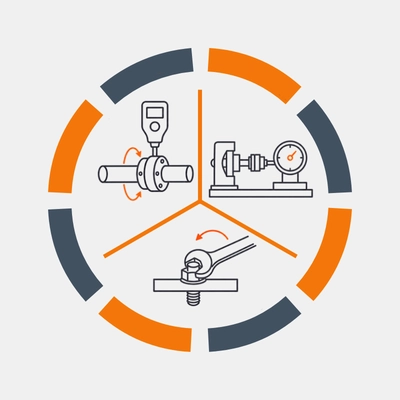
1. Measurement Contexts
- Torque Wrenches for controlled manual tightening of bolts and nuts, in click, beam, dial and electronic forms matched by capacity, drive size and accuracy class.
- Torque Screwdrivers on low-range, precision fastening for electronics, instrumentation and medical-device work, where over-tightening strips threads or cracks parts.
- Torque Testers and Analysers when you need to know the torque a hand or powered tool actually delivers, for incoming, periodic and audit checks.
- Torque Sensors and Transducers if you are building calibrated torque measurement into rigs, drivetrains or in-line monitoring, using reaction and rotary devices.
- Torque Calibration Equipment to verify and calibrate torque tools in-house to a traceable result, with loaders, benches and reference rigs.
- Cap Torque and Packaging for application and removal torque on caps and closures, where food, beverage, pharmaceutical and cosmetics packaging needs a secure yet openable seal.
For linear-force work — force gauges, dynamometers and tension testing, where the load acts along a line rather than around an axis — continue under Force Measurement.