
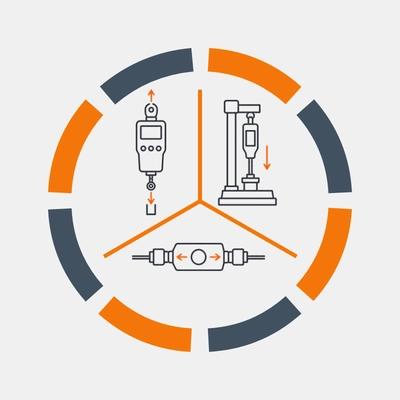
1. Measurement Contexts
- Force Gauges when a quick handheld or stand-mounted check of tension or compression is enough, across digital, mechanical and ergonomic types.
- Force Sensors & Electronics where the measurement lives inside a machine or runs to high capacity, calling for load cells, indicators and signal-conditioning hardware.
- Force Test Stands when the load has to be applied the same way every time, on a manual or motorised frame where repeatability, travel and speed matter.
- Wire Crimp & Pull Testing if you are validating crimped or soldered terminations, with dedicated crimp-pull testers and production-ready setups.
- Accessories & Software for Force Measurement once the instrument is chosen and it is the grips, fixtures, logging and reporting around it that need sorting out.
For applying and verifying rotational force on fasteners and joints, continue under Torque Measurement.